
How offices are evolving
Office design in 2026 reflects a continued shift away from rigid, desk-led layouts. Workplaces are now expected to support a range of activities, from focused individual work to collaboration, social interaction and virtual meetings.
Design decisions are increasingly shaped by flexibility, wellbeing and long-term performance, rather than short-term aesthetics.
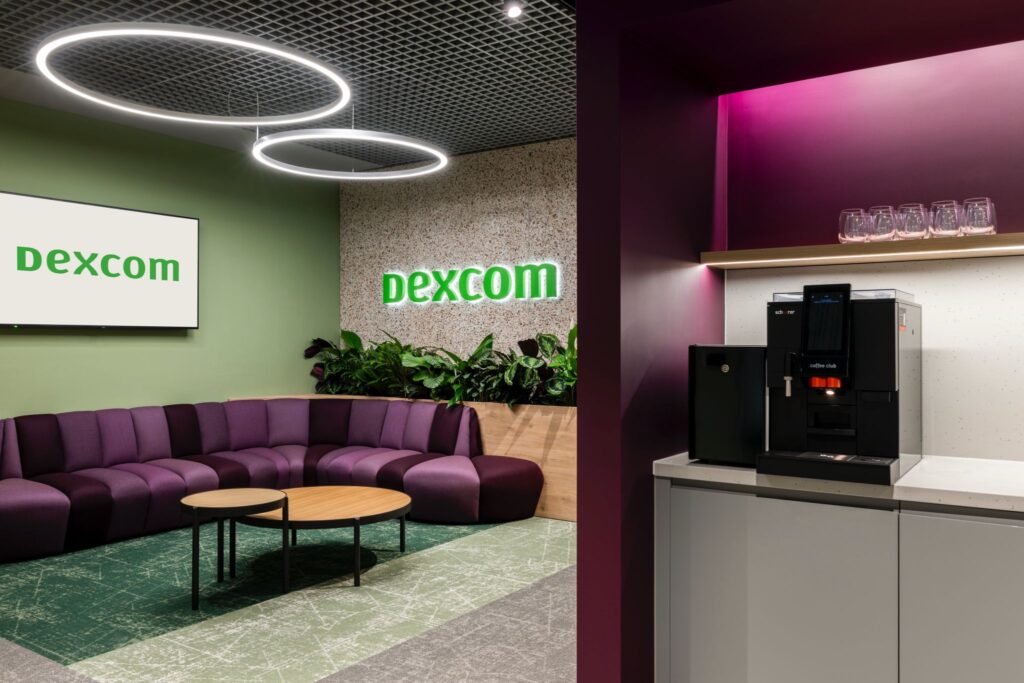
Image from Dexcom
Lighting trends for 2026
Lighting in 2026 is less about making spaces brighter and more about making them work better.
As offices move towards flexible layouts and mixed-use environments, lighting is expected to adapt throughout the day. A single, uniform solution no longer suits spaces that support focused work in the morning, collaboration in the afternoon and quieter activity later on.
One of the biggest shifts is the more considered use of adjustable colour temperature. Rather than applying it across entire floors, it’s used selectively, supporting different activities where it adds genuine value. This allows spaces to feel calmer, more focused or more relaxed depending on how they’re being used.
There is also a move towards layered lighting, where ambient light is supported by task and feature lighting. This creates depth, improves visual comfort and allows spaces to feel well-lit without relying on high light levels everywhere.
Offices are also moving away from cold, flat lighting. Warmer, more balanced environments are increasingly common, particularly in reception areas, breakout spaces and informal meeting zones. The aim is to create spaces that feel welcoming and comfortable over longer periods of time.
As layouts become more varied, zoning and independent control play a bigger role. Different areas require different lighting behaviours, and the ability to adjust lighting by zone helps spaces respond as needs change.
Lighting is also being designed more closely alongside ceilings and architectural features. Integrated solutions allow lighting to sit more quietly within the space, supporting acoustic treatments and ceiling design rather than competing with them.
Finally, smarter control strategies are becoming standard. Daylight and occupancy response help improve efficiency and comfort, with systems designed to operate in the background without constant user input.
Overall, lighting in 2026 supports flexibility, comfort and longevity, working as part of the wider design rather than standing apart from it.
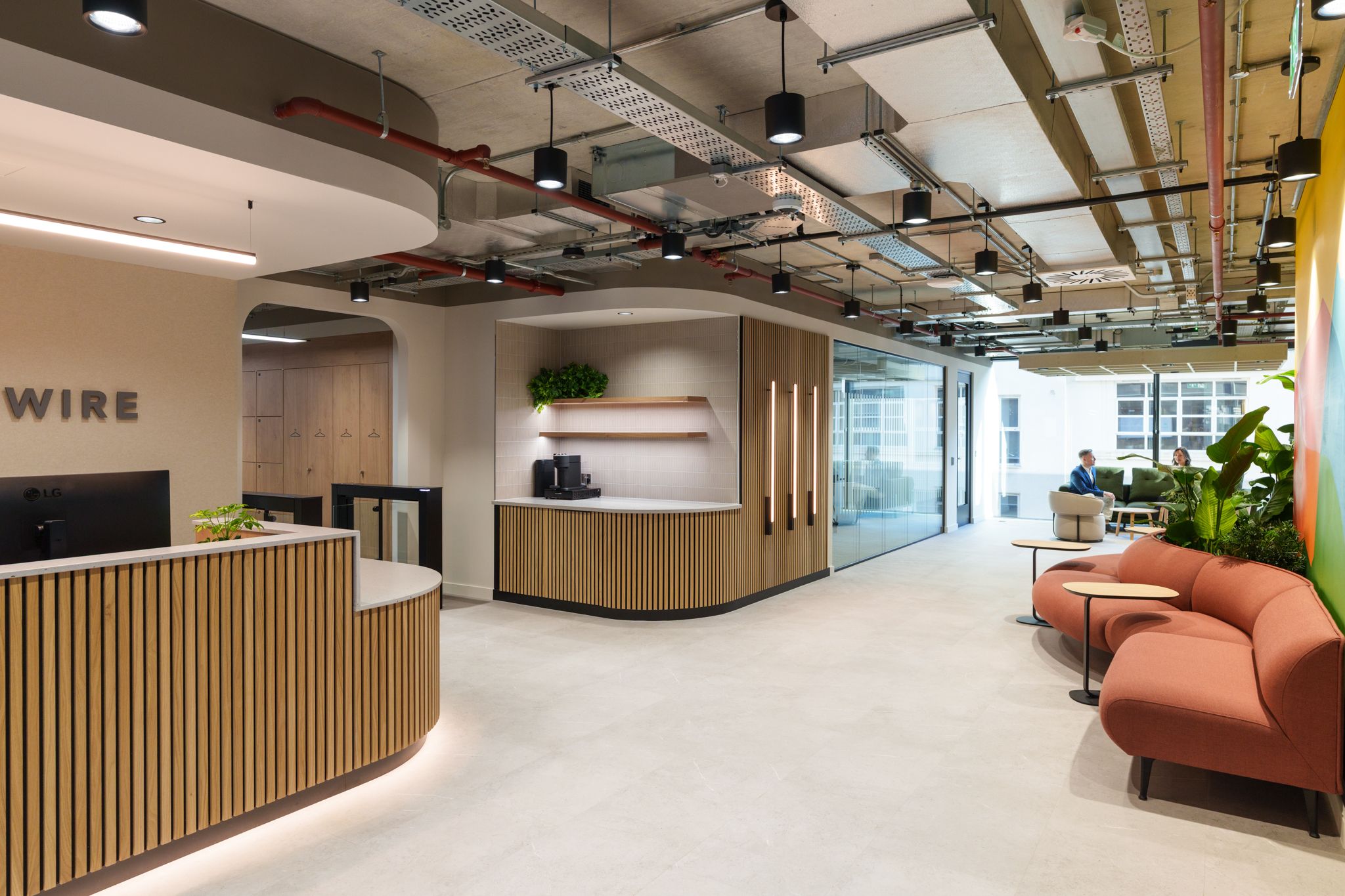
Image from Peldon Rose
Flexible, multi-use layouts
Walk into an office in 2026 and it rarely feels like one single space doing one single job.
Instead of rows of fixed desks, the workplace is broken into a series of environments that change pace and purpose as the day unfolds. A quiet corner that supports deep focus in the morning might sit just metres away from a lively collaboration area used for team catch-ups and workshops in the afternoon.
You’ll see:
-
Enclosed or semi-screened areas where people can concentrate without distraction
-
Informal collaboration spaces designed for conversation, not formal meetings
-
Touchdown areas for short stays between calls or tasks
-
Social and breakout spaces that encourage connection, not just coffee breaks
The story behind this shift is simple. People no longer work in one way, or even in one place, all day. Offices are being designed to support movement, choice and variety, allowing individuals and teams to gravitate towards the space that best suits what they’re doing at that moment.
Furniture, technology and spatial planning work together to make this possible. Spaces are easier to reconfigure, services are more flexible, and layouts are designed with change in mind. The result is an office that can adapt over time, rather than needing to be redesigned every time working patterns evolve.
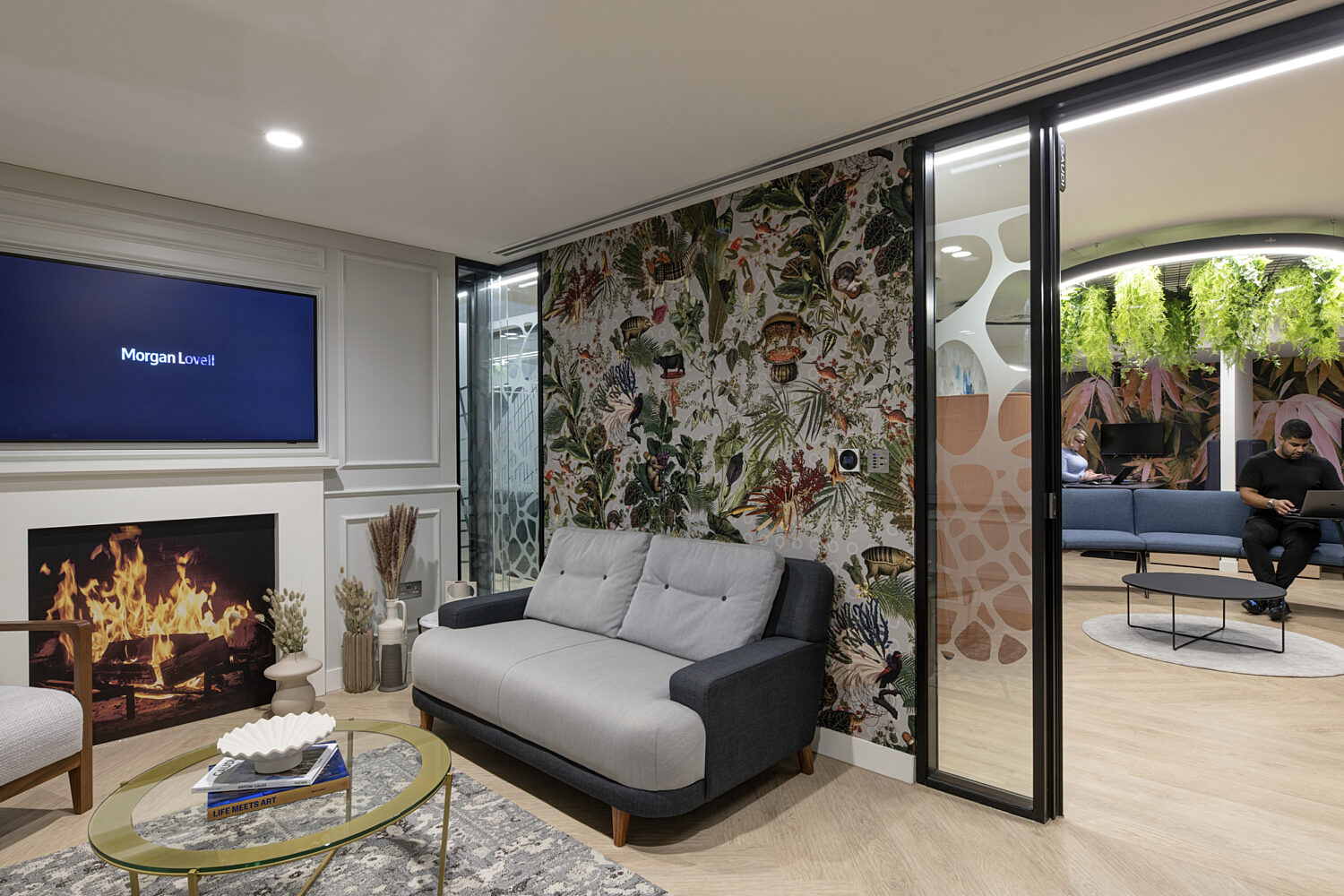
Image from Morgan Lovell
Wellbeing as a design driver
Wellbeing is no longer something added at the end of an office project. In 2026, it influences decisions from the very start.
Offices are being designed around the reality that people may spend less time in the workplace, but when they are there, the environment needs to support them properly. Comfort, focus and ease of use matter more than ever.
Layouts increasingly prioritise natural light, with spaces arranged to make better use of daylight and reduce harsh contrasts. Where daylight is limited, lighting is used to create a consistent, comfortable environment that avoids fatigue.
Acoustic performance is also receiving more attention. As offices become more open and collaborative, sound control helps prevent distraction and supports both focused work and conversation.
The use of biophilic elements and natural materials helps soften interiors and create calmer, more balanced spaces, while choice and movement are built into layouts through a mix of seating, standing and informal areas.
Together, these decisions create workplaces that support productivity and comfort over longer periods, without overcomplicating the design.
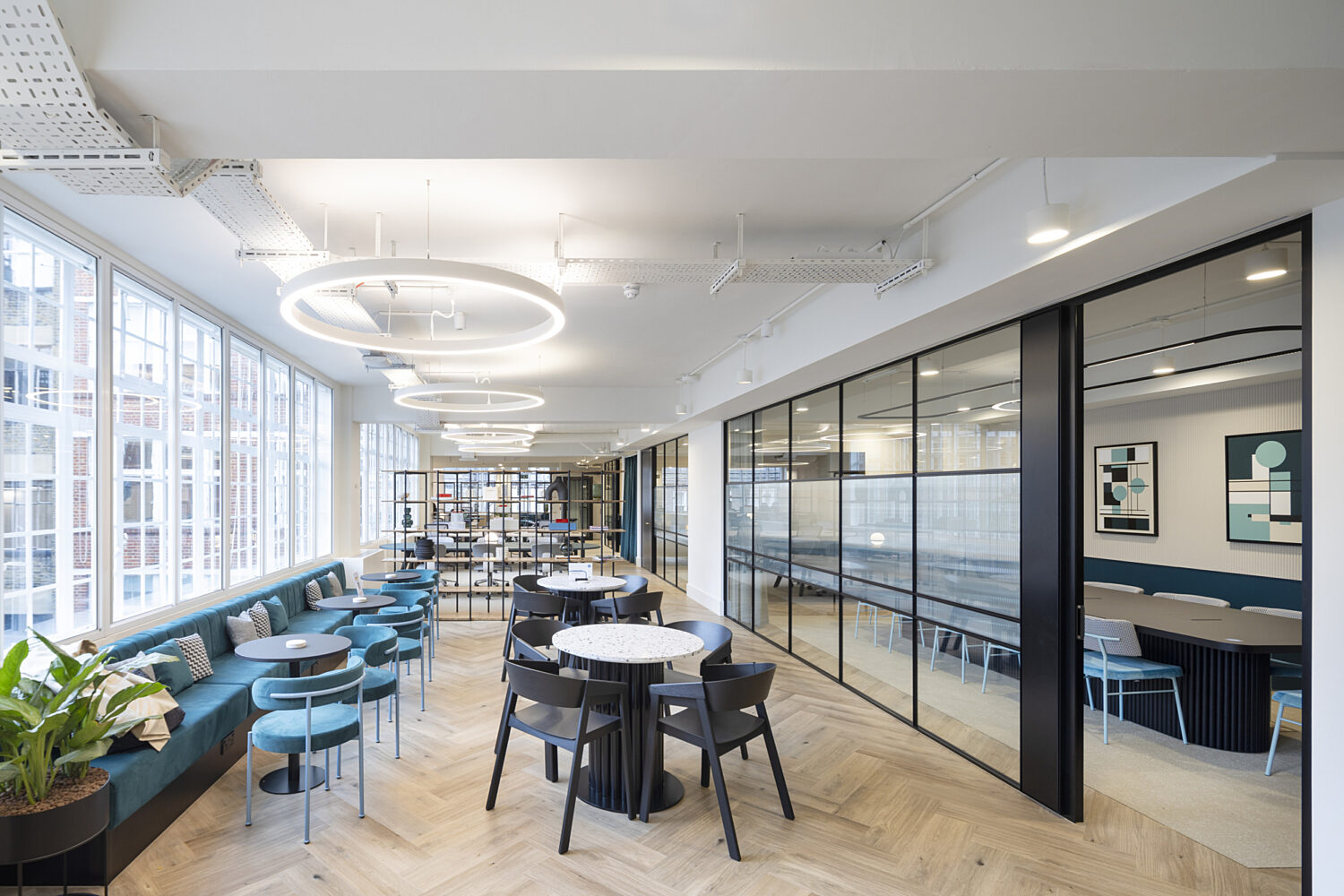
Image from GPE Elsey House
Sustainability beyond efficiency
In 2026, sustainability in office design is less about headline figures and more about what happens over the lifetime of a building.
Energy efficiency still matters, but it’s no longer the only measure of success. Increasingly, designers and clients are asking how long a space will remain usable, how easily it can adapt, and how much intervention it will need as requirements change.
This has led to a stronger focus on durability and serviceability. Products and systems are expected to last, be maintained, and be repaired where possible, rather than replaced at the first sign of change. Longevity is becoming a key part of responsible design.
There is also greater emphasis on adaptability over the life of the building. Offices are planned with the expectation that layouts, teams and working patterns will evolve. Spaces, services and infrastructure are designed to flex with these changes, reducing the need for repeated strip-outs and refits.
Material selection plays a role too. Choices are increasingly informed by performance, lifespan and environmental impact, rather than short-term trends. The aim is to specify materials that age well and continue to perform over time.
Taken together, these approaches reflect a broader understanding of sustainability. Offices are designed to remain useful, relevant and efficient for years to come, not just at the point of handover.
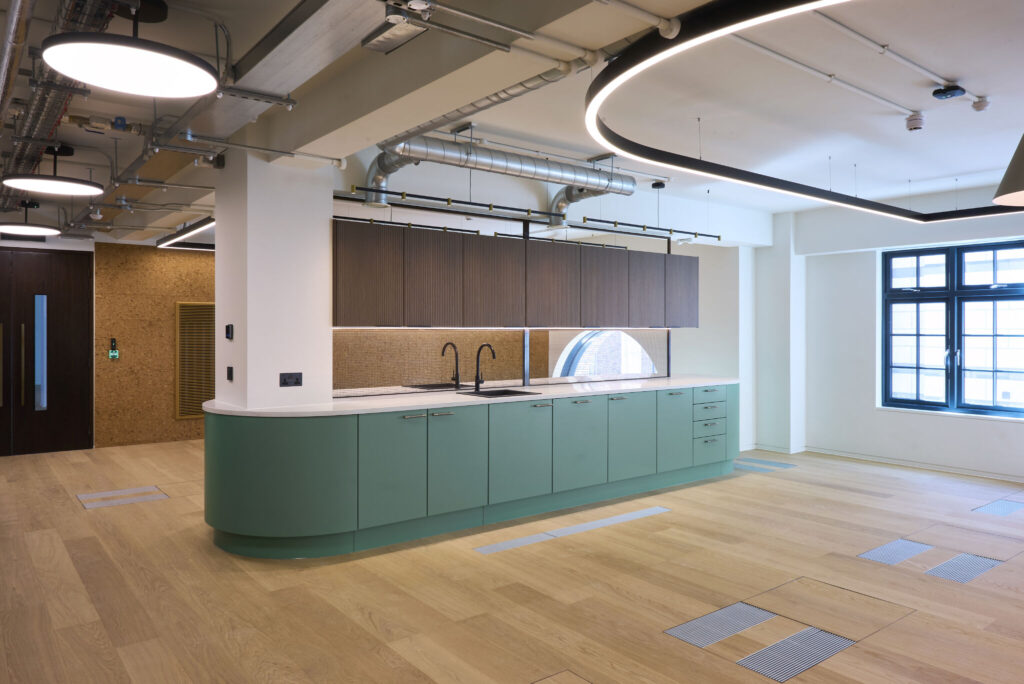
Image from Gemco
Looking ahead
Office design in 2026 is about balance. Workplaces need to be flexible enough to adapt as teams and working patterns change, while still offering comfort, clarity and a sense of purpose for the people using them every day.
Successful offices are those that support a wide range of needs without feeling overdesigned. They allow people to move between focused work, collaboration and social interaction with ease, and they remain practical and efficient as requirements evolve over time.
This is where thoughtful coordination really matters. When layout, technology, materials and lighting are considered together, spaces work more effectively from the outset and are better equipped to cope with change. Decisions made early in the design process help avoid compromise later on.
Looking ahead, the focus is less on chasing trends and more on creating workplaces that continue to perform well, feel comfortable to use, and remain relevant long after the initial fit-out is complete.